Micronutrients
The dietary landscape of a man over thirty-five presents a specific compositional challenge. Caloric requirements shift, physical recovery timelines extend, and the marginal nutritional deficiencies that accumulated quietly across earlier years begin to register more legibly in daily function. Among the micronutrients most frequently under-represented in the modern male diet, zinc and selenium occupy a particular position — each playing distinct but complementary roles in the biological machinery that governs immune response, cellular energy production, and protection against oxidative stress.
Zinc is involved in more enzymatic reactions than any other trace mineral in the human body. Published dietary research consistently identifies it as a contributor to normal cognitive function, immune health, and protein synthesis. For men over 35, whose dietary patterns often tilt toward convenience foods and reduced variety, the practical question is not the mechanism but the source.
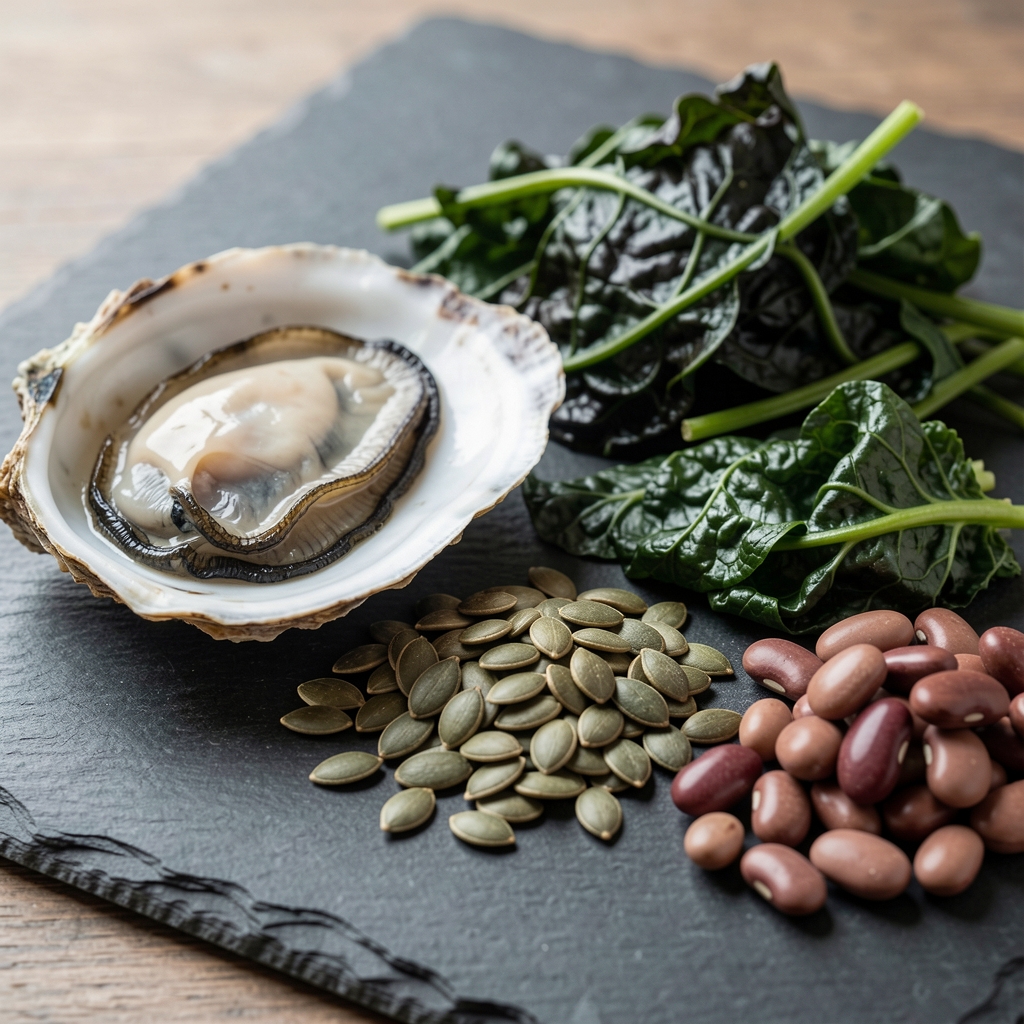
Animal proteins remain the most bioavailable dietary source. Shellfish — particularly oysters — deliver the highest concentration per gram of any common food. Red meat, poultry, and eggs provide substantive amounts within realistic portion contexts. For those whose diets lean toward plant-dominant patterns, the picture is more nuanced: pumpkin seeds, hemp seeds, and legumes carry measurable zinc, but phytic acid in these foods binds the mineral during digestion, reducing net absorption. Soaking or sprouting legumes prior to preparation has been documented to reduce phytic acid content and improve bioavailability.
"The practical question is not whether zinc matters — the published evidence on that point is settled — but how reliably a working man's typical weekly menu delivers it."
Selenium contributes to the protection of cells from oxidative stress and supports normal immune function. Dietary selenium content is uniquely dependent on soil composition, which introduces a geographic dimension absent from most micronutrient discussions. Agricultural land across parts of Northern Europe, including the United Kingdom, is associated with lower selenium concentrations than comparable land in South America or North America.
Brazil nuts are the most concentrated single-food source: a pair of nuts per day delivers selenium within published reference intake ranges without approaching the upper tolerable intake level. Seafood — particularly tuna, sardines, and prawns — provides reliable selenium across a range of cooking preparations. Eggs, whole grains, and sunflower seeds contribute moderate amounts; their value lies in regularity rather than concentration.
Cereal grain selenium content reflects the soil in which the grain was grown. UK-sourced wheat and oats are therefore a less dependable source than the same grain varieties grown in North American soils. This does not diminish their dietary importance — it contextualises the role of dietary variety in maintaining adequate selenium across the week.
Both minerals are subject to absorption variables that the standard dietary reference values do not fully communicate. Zinc absorption is reduced by phytic acid (as noted), calcium in very high quantities, and certain polyphenol compounds. Alcohol consumption at sustained levels has been associated with increased urinary zinc loss, independent of dietary intake. The practical implication is that the net contribution of a zinc-rich meal is not a fixed value — it sits within a range shaped by the broader dietary context in which it appears.
Selenium, by contrast, is relatively well-absorbed from most food sources. Organic selenium forms — selenomethionine, found in plant foods and animal products that consumed selenium-rich feed — are absorbed at higher rates than inorganic forms. Absorption does not decline significantly with age, which distinguishes selenium from some other trace minerals whose bioavailability is affected by gastrointestinal changes associated with ageing.
A dietary approach that combines animal and plant sources — varied protein selection across the week, regular inclusion of nuts and seeds, and whole grain choices from a range of origins — addresses both minerals without requiring precise meal-by-meal calculation. The evidence supports dietary variety as the most practical and effective method.
For men working full-time schedules with limited preparation time, the challenge is constructing a zinc- and selenium-adequate weekly menu that does not rely on novel ingredients or elaborate preparation. Several patterns emerge from nutritional survey data:
A twice-weekly inclusion of lean red meat or poultry provides a zinc baseline. One to two portions of oily or white fish per week addresses selenium. A daily handful of mixed seeds — pumpkin, sunflower, hemp — adds both minerals in moderate amounts across the meal structure. Eggs, used in any form across breakfast or mid-week meals, contribute to both mineral profiles simultaneously.
The breakfast context is particularly relevant for desk-working men whose midday meal is often constrained by time or location. A breakfast that incorporates eggs, whole grain bread, and a small quantity of seeds delivers a nutritionally substantive morning profile without requiring significant preparation time. This approach aligns with the broader evidence on balanced breakfast composition for active men — a subject the editorial team has examined in depth in a companion article.
Micronutrient adequacy does not operate in isolation. The gut microbiome environment, which influences absorption across a range of nutrients, is itself shaped by dietary fibre intake, hydration, and the diversity of plant foods in the diet. Gut-friendly foods — fermented vegetables, legumes, prebiotic fibre sources — create the absorptive conditions in which zinc and selenium are more efficiently taken up.
Heart-healthy dietary patterns, characterised by their emphasis on healthy fats, whole grains, and reduced ultra-processed food intake, tend to coincide with higher dietary zinc and selenium adequacy. This is not a coincidental correlation: the food groups associated with cardiovascular dietary support overlap substantially with those associated with adequate trace mineral intake.
For men over 35, a diet that addresses heart-healthy eating for energy, post-workout nutritional recovery, and sustained metabolic function will, by design, tend to provide adequate zinc and selenium — provided that dietary variety is maintained and that the specific food groups noted above are present with some regularity. The case for whole-food dietary diversity, examined through any one nutritional lens, tends to produce the same structural conclusion.

Author
Eleanor Whitfield
Eleanor Whitfield is the senior editor at Rakon Letters. Her editorial focus spans micronutrient sourcing, metabolic nutrition, and the practical dietary patterns of men in middle age. She holds a background in nutritional science and has contributed to independent editorial publications across the United Kingdom since 2019.
More from this author →